How Long Does It Take to Learn the Piano?
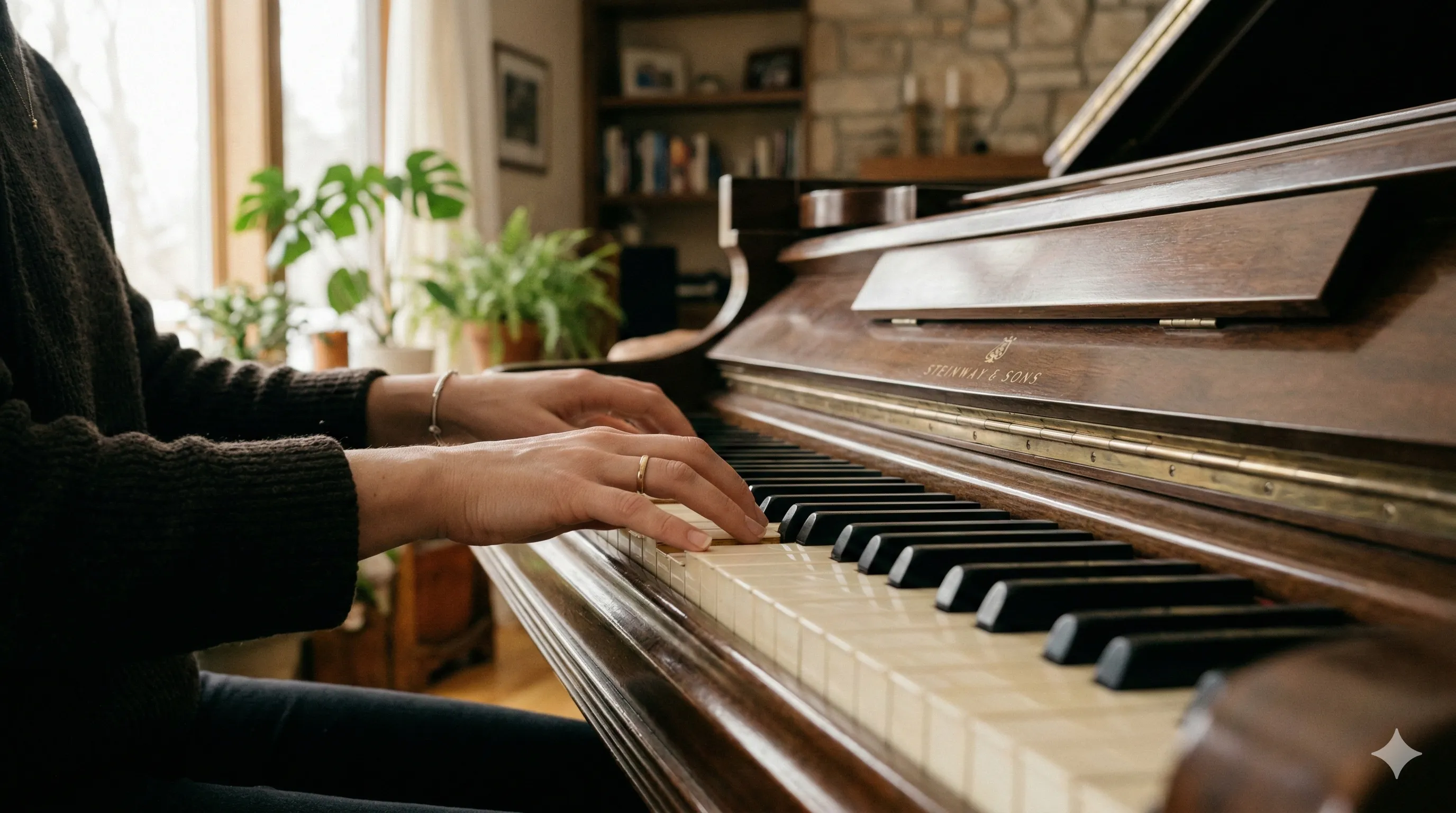
If you've ever sat down at a piano and wondered whether you could actually learn to play it, the answer is a confident yes. But the more interesting question is: how long will it take? And the honest answer is: it depends — on your goals, your consistency, and how you approach the craft.
Unlike many instruments, the piano has a uniquely visible logic. Notes run left to right in pitch order, both hands are in plain sight, and the connection between what you press and what you hear is direct and immediate. That makes the early stages very approachable. But the piano is also an instrument of considerable depth. Developing true fluency takes years of deliberate, structured practice. The good news? You'll experience genuine, satisfying progress long before you reach that level.
This guide breaks down what to realistically expect at different stages of learning — measured not by songs, but by the techniques and physical skills that actually define a pianist's ability.
The Truth About Progress: It's Different for Everyone
Progress on the piano is not linear, and no two learners follow the same path. Some people find hand independence clicks quickly; others spend months on it. Some players build a strong sense of rhythm from day one; others need deliberate, sustained work to internalize pulse and subdivision. None of this reflects talent — it reflects experience, background, and the nature of individual learning.
What matters most is not how fast you move, but how consistently you show up. Consistency beats intensity. Regular, focused sessions of 20 to 30 minutes will take you further than occasional multi-hour marathons. The brain and the hands both need repetition over time to build the neural pathways that make technique feel natural.
So before diving into timelines, internalize this: there is no “too slow.” Every session at the keyboard is progress, even when it doesn't feel that way.
What You're Actually Learning: The Core Techniques
To understand how long the piano takes to learn, it helps to understand what you're actually working toward. Piano technique is a collection of distinct physical and musical skills that build on one another. Here are the most important:
Hand position and posture. Before anything else, a pianist needs to develop the right physical relationship with the instrument — relaxed shoulders, curved fingers, a neutral wrist, and a balanced seated position. Poor posture leads to tension, and tension is the enemy of speed, control, and long-term health.
Finger independence. Each finger needs to develop its own strength and agency, particularly the weaker ring and little fingers. This is one of the first major challenges beginners encounter, and it takes weeks to months of targeted work.
Hand independence. The ability to coordinate two hands doing different things simultaneously is the defining challenge of piano playing. The left hand may be holding a steady bass pattern while the right hand plays a flowing melody at a different rhythm. This takes considerable time and patience to develop, and remains an area of ongoing refinement even for advanced players.
Scales and arpeggios. These foundational patterns underpin almost everything you'll ever play. Learning major and minor scales teaches finger patterns, builds dexterity, and develops a feel for different keys. Arpeggios extend this to chord tones spread across the keyboard, requiring smooth thumb-under technique and an even tone across the hand.
Touch and dynamics. The piano is one of the most expressive instruments in existence precisely because of its sensitivity to touch. Learning to control volume — from a whisper to a thunderclap — and to shape phrases with intentional dynamics is a skill that evolves throughout a pianist's entire life.
Sight-reading. The ability to look at sheet music and translate it into sound in real time. This develops slowly and requires regular, patient practice. It is often neglected by beginners, but it is one of the most valuable long-term investments a pianist can make.
Pedalling. The sustain pedal, when used well, transforms the piano's sound. Learning when to press, when to release, and how to use it musically — rather than just for volume — is a technique that takes time to feel natural.

Start Learning Piano with Rechords
Play along with color-coded chords and learn the songs you love.
A Realistic Timeline by Stage
The First Three Months: Building the Foundation
In the first three months, you're establishing the physical and conceptual groundwork that everything else will rest on. This is the stage where patience is most important, because progress can feel slow even when it's actually significant.
By the end of three months of regular practice, most beginners can expect to:
- Sit correctly at the instrument with a relaxed, functional hand position
- Use all five fingers on each hand with basic independence
- Play simple five-finger patterns hands separately with reasonable control
- Begin to put both hands together in slow, simple contexts
- Understand the layout of the keyboard and identify notes by name
- Read basic notation in both treble and bass clef
- Play simple scales (C major, G major) with correct fingering
- Produce a consistent, even tone with deliberate finger control
The key word here is deliberate. At this stage, nothing should be rushed. Slow, conscious practice is the most effective practice.
Three to Six Months: Coordination and Consistency
This is where hand independence starts to come into its own. The challenge shifts from learning what to do to making your hands actually do it together and reliably.
By six months, a consistent practitioner can typically:
- Play major scales with both hands simultaneously, including scales with crossings and thumb-under technique
- Begin minor scales (natural, harmonic)
- Play simple chord progressions in both hands with steady rhythm
- Begin developing a sense of legato phrasing — making notes connect smoothly and musically
- Introduce the sustain pedal into playing, beginning to coordinate pedal changes with the harmony
- Start reading music that contains both hands at a moderate tempo
- Begin applying basic dynamics — soft and loud passages — intentionally
This stage is where many self-taught beginners plateau, because the exercises and techniques become genuinely challenging. Structured guidance — whether from a teacher or a well-designed curriculum — is enormously helpful here.
Six to Twelve Months: Expanding Vocabulary
A pianist who has worked consistently for six months to a year starts to feel genuinely capable. The fundamentals begin to feel more automatic, freeing up mental bandwidth to focus on musicality rather than mechanics.
Milestones at this stage include:
- Fluency with all major scales and the most common minor scales
- Introduction to arpeggios across the keyboard
- Developing a more nuanced sense of touch — shaping individual phrases, adding colour and expression
- Sight-reading simple music in real time, even if slowly
- Playing intermediate-level material with both hands together at a musical tempo
- Beginning to develop a personal sense of style and musical preference
- Exploring basic music theory — how chords are built, how keys relate, what progressions mean
By the end of the first year, a dedicated student will have a solid, genuine skill set. They're not an advanced player, but they are a real pianist, with real capability.
One to Three Years: Refinement and Depth
This is where playing starts to feel genuinely musical in a deep sense. The physical mechanics become more subconscious, and the player can focus increasingly on interpretation, expression, and stylistic development.
At this level:
- Technical exercises such as Hanon or Czerny studies develop speed, evenness, and finger strength systematically
- Advanced scale and arpeggio patterns across all keys feel comfortable
- The player begins exploring more complex rhythmic relationships between the hands
- Sight-reading becomes a practical, usable skill
- Pedalling becomes nuanced and intentional, not just habitual
- The player develops opinions about tone, touch, and phrasing — and has the tools to execute them
Three years of focused study places a pianist in genuinely intermediate territory. Many adult learners find this range deeply satisfying — it's a level where you can play a wide variety of music with real expressiveness and control.
Three Years and Beyond: The Long Game
Advanced piano technique — the ability to tackle demanding repertoire with power, speed, delicacy, and full musical control — takes years, sometimes decades, to fully develop. This is not a discouraging fact. It simply reflects how rich the instrument is. Concert-level playing requires not just physical mastery but deep musical understanding, an ability to project sound across a room, and a highly refined interpretive sense.
But “advanced” is not the only worthy goal. Many passionate, serious amateur pianists play at a high intermediate level their entire lives and derive enormous joy and satisfaction from it. The goal of learning piano need not be perfection — it can simply be expression, enjoyment, and growth.
How Much Should You Practice?
Quality matters more than quantity, especially in the early stages. For beginners, 20 to 30 minutes of focused practice per day is both achievable and highly effective. Practicing five days a week is better than practicing for two hours on Saturday and nothing else.
As you advance, longer sessions become both necessary and natural. Intermediate players often practice 45 minutes to an hour daily, with more serious students going beyond that. But the principle remains the same: regular, attentive practice always beats sporadic marathon sessions.
One useful habit is to divide practice time deliberately — some time for technique (scales, arpeggios, exercises), some for reading new material, and some for working deeply on pieces you already know. This balance keeps sessions varied, productive, and less prone to mindless repetition.
Does It Get Easier?
In one sense, yes — and in another, no. The early challenges of hand position, basic note reading, and simple coordination do become second nature over time. But as those things become automatic, you take on more demanding material, so there's always a frontier where things feel hard. That's actually a good sign. Struggle is the signal that you're growing.
The part that genuinely gets easier — and stays easier — is the enjoyment. Most pianists find that the deeper they go, the more they love the instrument. The piano is remarkably generous: the more you put in, the more it gives back.
Final Thoughts
There's no single answer to how long it takes to learn the piano, because “learning the piano” means different things to different people. If your goal is to sit down comfortably and play music you love with real feeling and control, that's absolutely achievable within one to two years of consistent work. If your goal is to master the instrument in its fullest technical and musical sense, that's a lifelong journey — and a deeply rewarding one.
What's worth remembering is this: the piano will meet you where you are. On day one, it will give you a sound. In a month, it will give you a melody. In a year, it will give you music. And from there, the horizon just keeps expanding.
So if you've been wondering whether now is a good time to start — it is. Pick up where you are, and go forward. Every great pianist was once a complete beginner.
Frequently Asked Questions
How long does it take to learn piano as a complete beginner?
Most complete beginners can play simple melodies and basic scales within the first three months of regular practice. With consistent daily sessions of 20 to 30 minutes, you can expect to play music you enjoy with real feeling and control within one to two years.
How much should I practice piano each day?
For beginners, 20 to 30 minutes of focused practice per day, five days a week, is highly effective. As you advance, 45 minutes to an hour becomes more common. Quality and consistency matter far more than marathon sessions.
Can I teach myself piano without a teacher?
Yes, many people successfully learn piano on their own using apps, online resources, and structured curricula. However, a teacher or well-designed app can help you avoid bad habits and push past the plateaus that commonly occur around the three-to-six-month mark.
What is the hardest part of learning piano?
Hand independence — coordinating two hands doing different things simultaneously — is widely considered the defining challenge. It takes considerable time and patience, and remains an area of refinement even for advanced players.
Is it too late to learn piano as an adult?
Not at all. Adults can and do learn piano successfully at any age. While children may have some neurological advantages, adults bring focus, discipline, and musical awareness that often compensate. Many adult learners reach a deeply satisfying intermediate level within two to three years.
Do I need an acoustic piano to learn, or is a keyboard okay?
A weighted digital keyboard or digital piano is perfectly fine for learning, especially in the early years. What matters most is that it has full-size, touch-sensitive keys. You can also use piano learning apps like Rechords to practice with songs you love.
Ready to start your piano journey?
Rechords lets you learn and play songs you love with color-coded chords. Free to try, no gear required.
Get Rechords on the App Store